
Crows

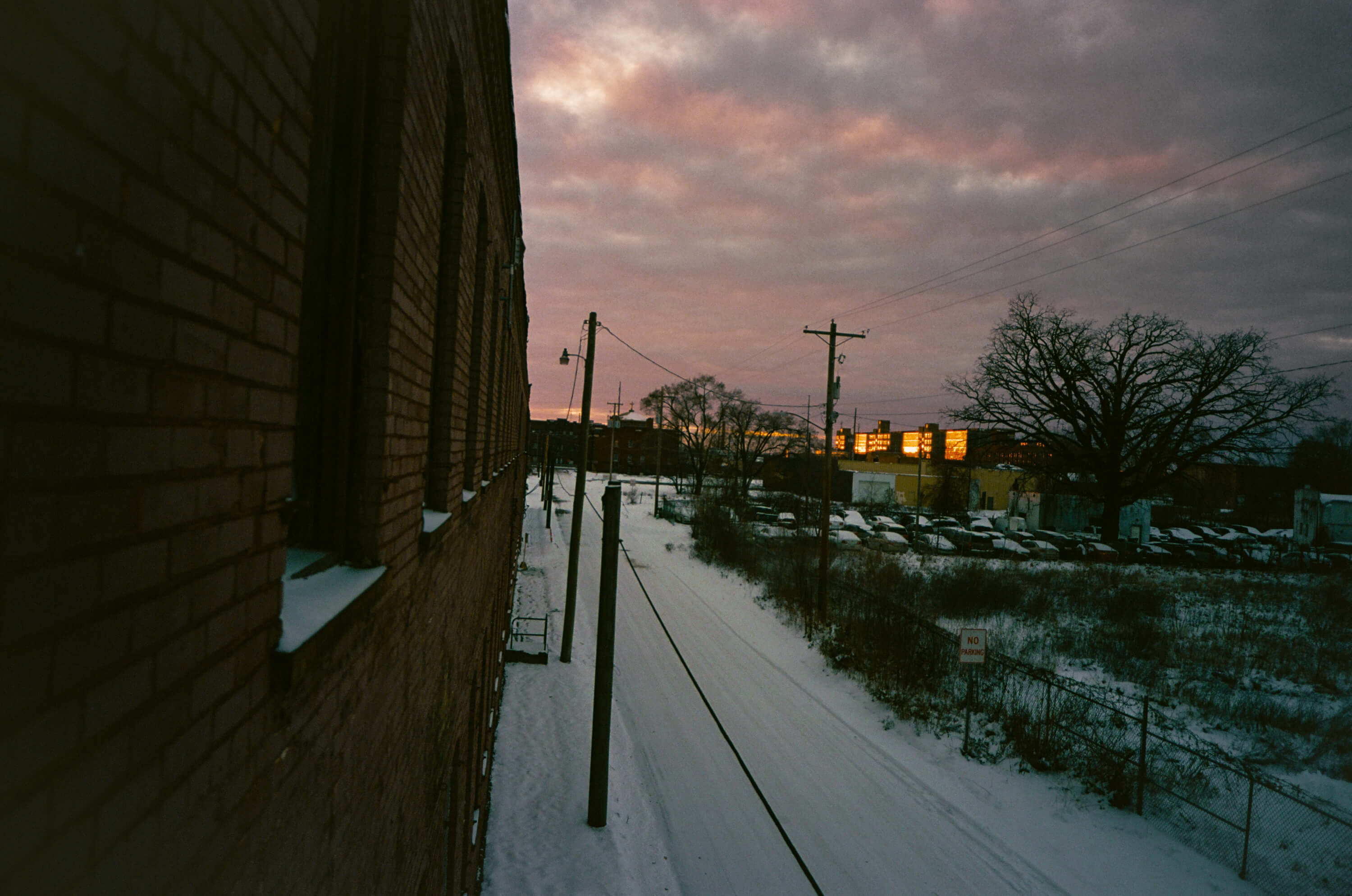
There’s a time of the year when the crows show up. It’s the time of the year when the sun hangs low in the southern sky, and it’s the time of the year when, if you drive west on Tutt Street in the hour before the sunset—as I do daily—the space-age yet sadly-pragmatic fiberglass exterior of the southern face of Studebaker Building 84, the company’s old main assembly plant; burns.
I haven’t seen another building burn like this before. Orange, bright orange and yellow. If I stand up halfway from the chair at my corner tanker desk in the studio I can catch a glimpse, and know it’s time to go home, time to make dinner, time to meet someone at the Oyster Bar and drink a Jameson again.
Once about ten years ago, I was sitting at the bar at LangLab when it was still in the yellow room, probably drinking a Pabst (or “Blue Ribbon” as my Papa Dave introduced me to them), when the bartender, one Shahir Rizk, asked, out of nowhere: “Have you written about the crows yet?” “No,” I said. And then about six months ago, Eddie, on Twitter: “…have you?” “This winter,” I said.
For those wondering what the fuss: each winter, an ungodly murder of crows descends on downtown South Bend and wanders around the nearby neighborhoods. They congregate on the railroad outside of the studio and ascend—thousands at a time—as a train rolls through, they make barren trees appear as if they’ve grown black, winter leaves—just the other night, I was driving home south on Lafayette, crossing LaSalle, and there they were: lining the roof of the Scottish Rite and the Civic Theatre and the Burger King, each tree in sight, and filling the sky… flying in circles—if you live here, you know it’s no exaggeration to say that an average evening in the shadow of this situation feels otherworldly and cinematic, like Alfred Hitchcock himself has come through to film the sequel, and you also know that, amid the already bleak landscape of a cloudy and rust-laden city in its coldest months, the feeling is: beautiful and compelling and—so dark.
They beckon a sense of dread and loss, and yet fill my eyes with wonder. Like a six-story, eight-hundred-thousand square-foot factory—designed by America’s leading industrial architect at the time—which produced the country’s first new model after the War and the world-famed fastest-in-the-world Avanti—left abandoned, silent. Covered in ivy my whole childhood. The paper said Ivy Tower, we did too. We were optimistic, we had ideas, all of it undone, the fiberglass exterior there to show for it, and it’s—burning bright, beautiful against the winter sky.
Halle moved here last fall, and so when I’m driving home west on Tutt Street, I have someone to share it with: “Look! Look at that...” I’ll say every day, asking her to pay attention to this monument to our city’s greatest loss, an icon of its enduring pain, while it puts on a show, and the crows fly overhead.